The camera experiment we did not ship
A target can stay visible and still become harder to follow. Three Cinder experiments, and why they stayed local.
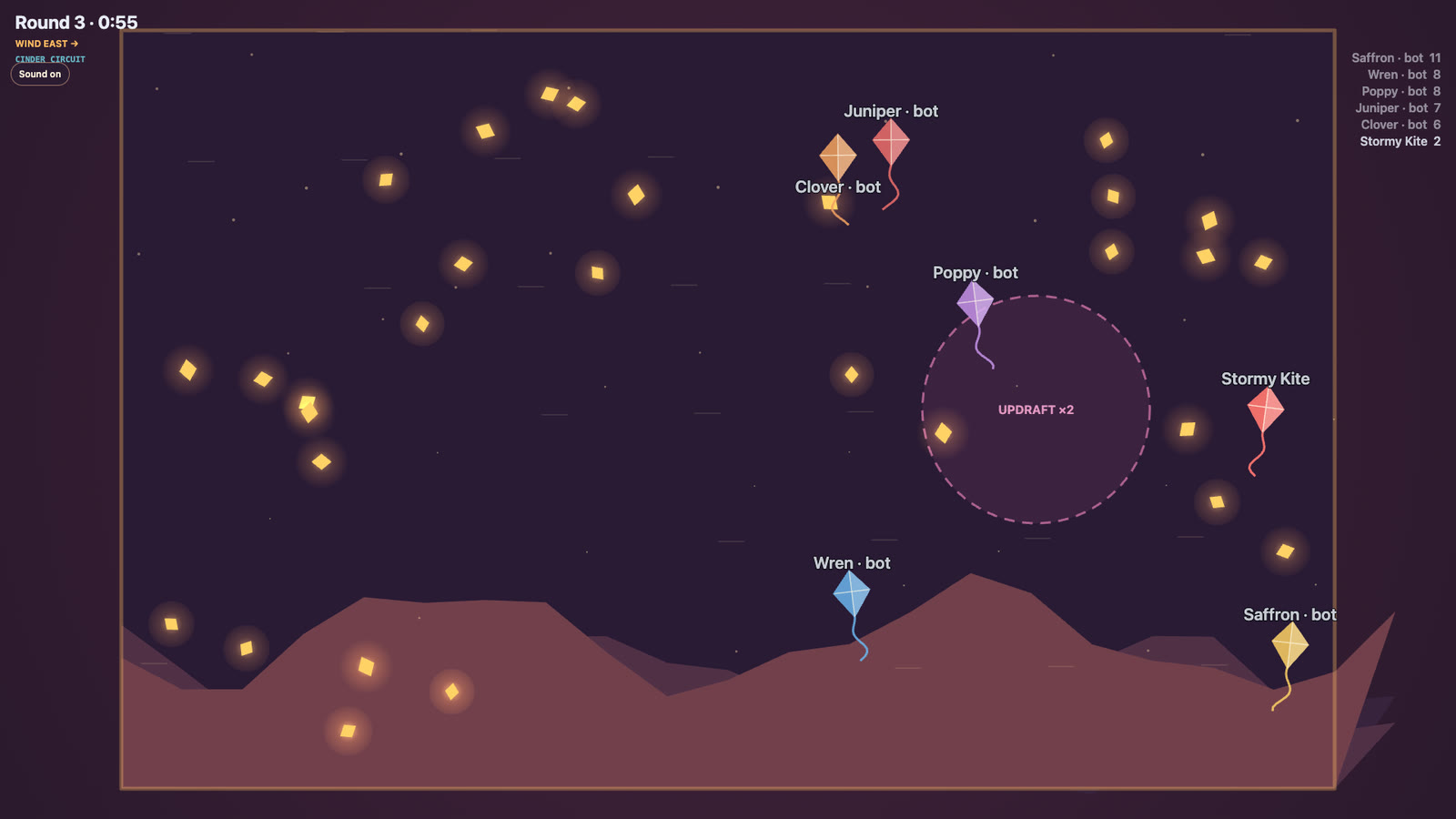
Cinder Circuit is still running the version described in our three-game build notes. Since that release, we have tried three changes locally. None earned a place in the live game.
First, make more room on a phone. Smaller portrait HUD bands exposed another 70 vertical pixels. We also showed the actual number of sparks lost in a hit, including bumps that lost none. Touch and multiplayer checks passed, but a fresh review fell from 59 to 57 out of 100. The bonus-direction cue still competed with the thumb control, and the round lacked a strong finish.
Then, give everyone one last prize. We moved the objective label clear of the thumb and dash controls. In the final ten seconds, eighteen double-value sparks appeared at the center, with a warning five seconds ahead. They did not respawn. A two-client check collected one, closed the hosting browser, and confirmed that its successor kept the remaining seventeen rather than recreating the prize. That was useful reliability evidence. It was not evidence of a more compelling round: the next review scored 55 and still wanted a more visible contest.
Finally, keep the target in view. A new phone camera widened until it could show both the kite and the entire bonus circle, then closed in as the kite approached. We kept the labels and small silhouettes readable. Across 720 sampled frames of touch movement, the player and circle stayed inside the intended margins in portrait and landscape.
That sounds like a successful fix. The pictures and play told a different story. During the review, the burst circle shrank from roughly 270 to 100 pixels across within twelve seconds. One landscape frame squeezed the arena into about 294 × 184 pixels of an 844 × 390 screen. The target remained visible, but tracking it meant continually adjusting to a changing scale. The review fell to 51. We rejected the dynamic zoom and restored the preceding camera in the development version.
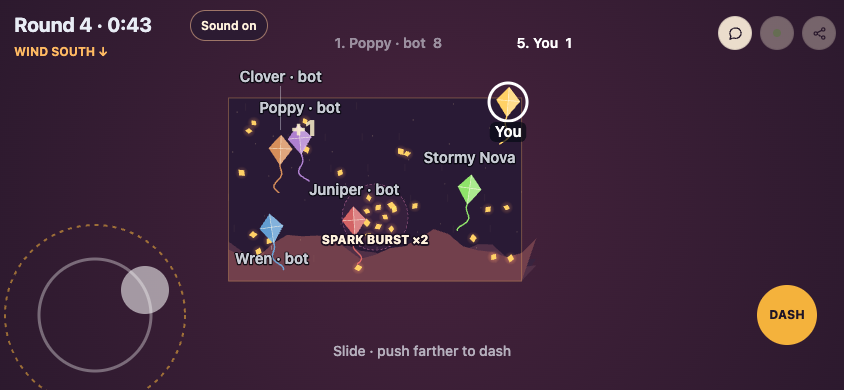
An actual frame from the rejected local experiment, not the current live game.
These scores come from separate fresh AI review sessions, not player ratings or a controlled experiment. The reviews used real Chrome with emulated touch; some full-round inputs used repeated direction sequences. Nobody tested physical thumb comfort or listened through a phone speaker. The scores help identify problems to investigate, but small differences are not precise measurements of enjoyment. None of these three reviewers wanted another round or recommended the game to a friend.
One tooling lesson was just as useful. A scripted run lost 5–21 to a bot and the report concluded that people could not win. The reviewer’s touch seat later finished second with 19 against 27, and earlier played versions had beaten or tied bots. A losing sample supports reporting that score gap; it does not establish a human skill ceiling. We recorded the warning and its limits in our local Homie field notes. Those notes have not been sent as a feedback message.
The next experiment will bring the contest closer together while keeping a steady viewing scale. We want less travel before an interesting decision, not a camera that keeps pulling away from it. The live games remain available while we work: Cinder Circuit, Lantern Ferry, and Signal Bloom.