Three blooms to get ready
A small practice target, visible shared connections, and a review that still asks for more.
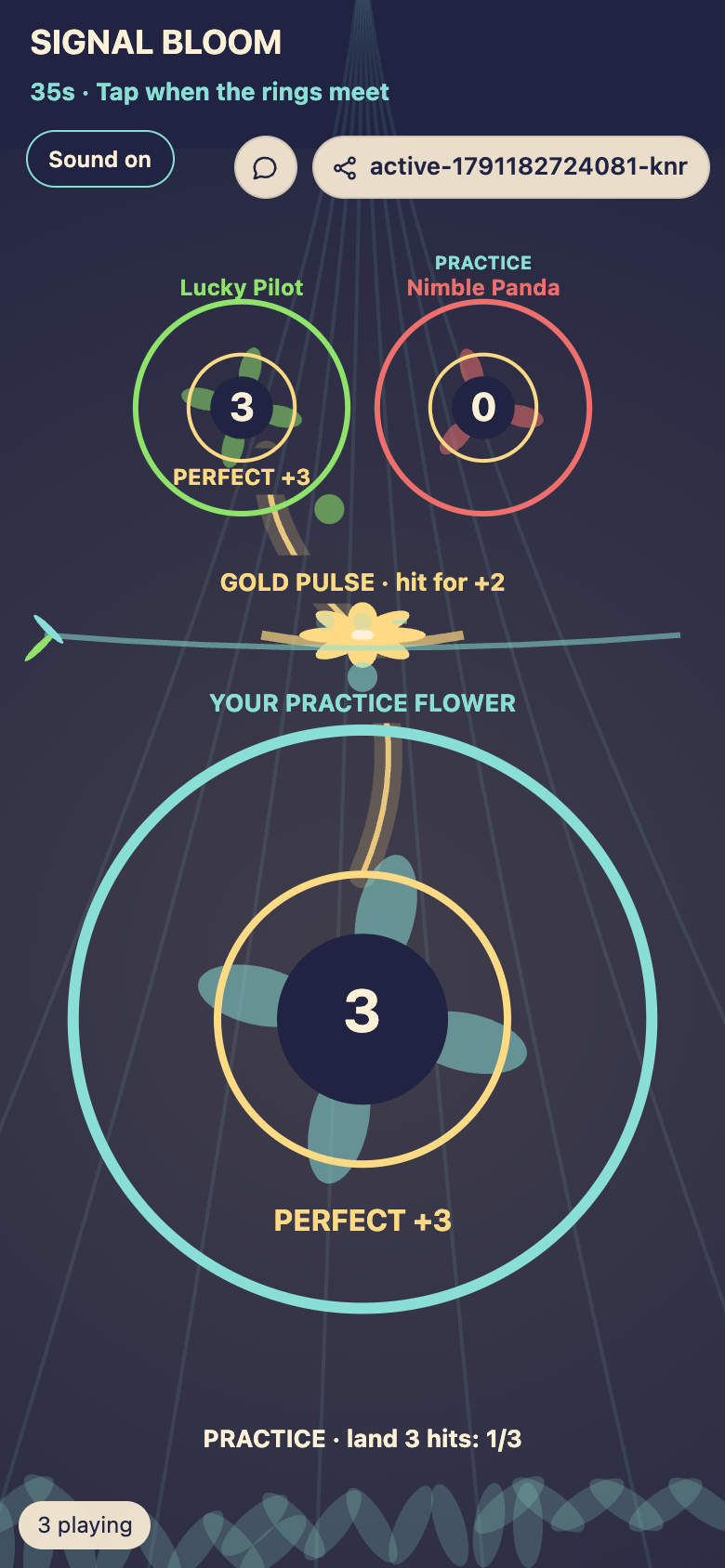
Joining Signal Bloom halfway through a round now gives you something small to aim for: land three hits. Progress survives a miss. If there is only time for fewer hits, the target shrinks. Finish it and the flower says READY; the next round still starts everyone at zero.
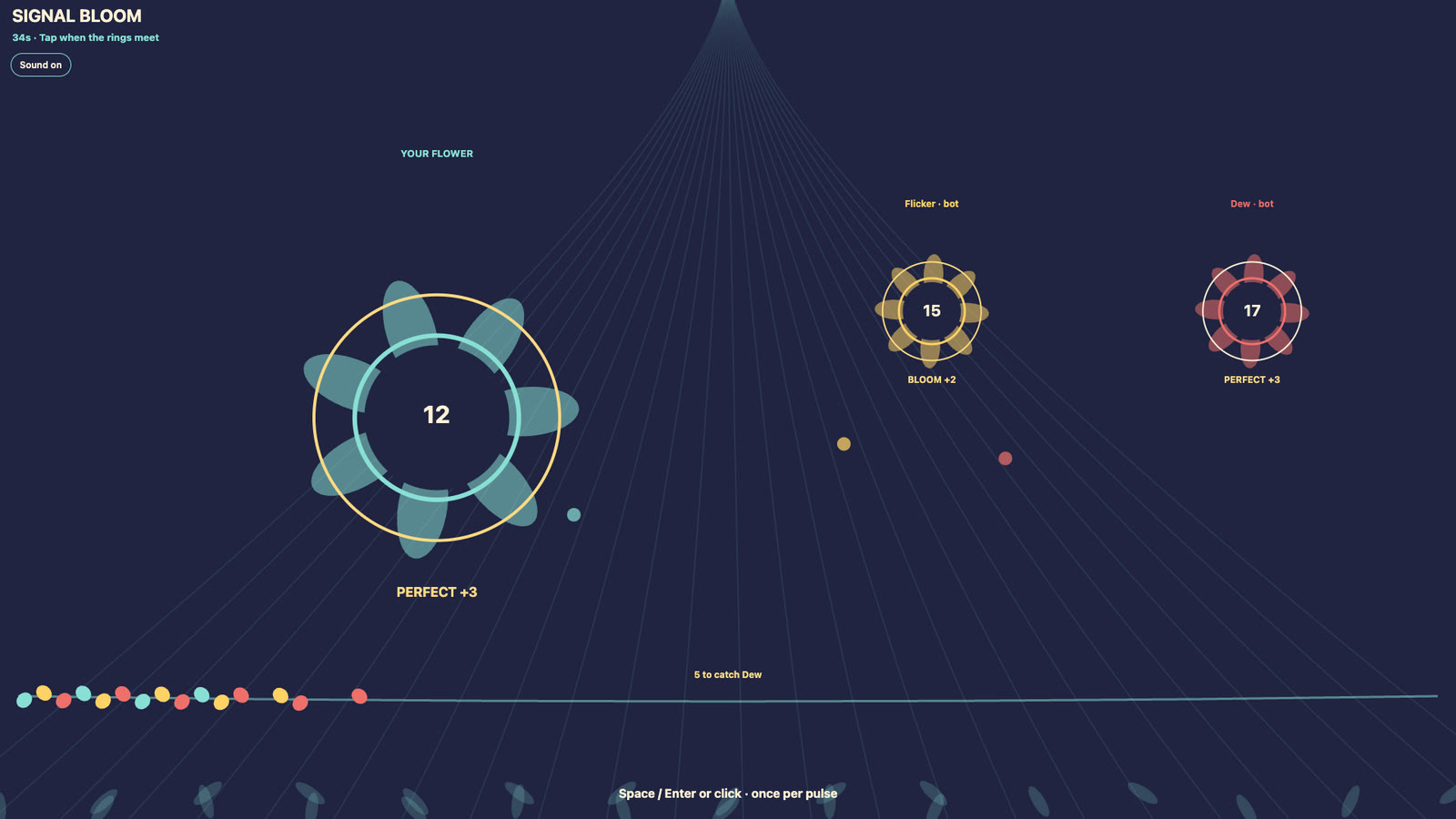
Shared success also sends gold light from the contributing flowers into a blossom on the common vine. A resting flower does not get a connection it did not earn. The new effect keeps its original event time through a host change, so an old celebration does not restart. Reduced-motion settings remove its traveling beads and expanding wave.
The first version drew a gold beam through the shared-success caption. Phone screenshots caught it; the connection now leaves space around that text. Rules tests and directed keyboard/touch checks covered misses, duplicate presses, a host departure, the next round, and an older host. All ten selected rendering, interface, shared-round and error checks passed. These are functional checks, not proof of fun.
A final very-late-entry check caught another mistake: a new visitor could briefly inherit the replaced bot's connecting light. Admission now removes that flower from the old celebration. The same check also covered all four flowers connecting and a one-hit target near the end of the round.
The fresh AI play review, before that final admission correction, gave the candidate 57/100, with no replay or recommendation. It completed a desktop round that ended 105–104 and a touch round at 50 against a bot's 73. Those inputs were assisted by reading rendered ring pixels, so the scores do not describe typical human timing. Sound, physical-phone comfort and play with independent human strangers remain unassessed.
The review's central criticism survives this update: connecting the flowers visually does not give players much reason to change what they do together. The finish still repeats the same timing action, the garden's growth is modest, and results do not explain the accuracy behind a narrow loss. A practice goal is a useful step, but this experiment has not earned an overall polish claim.