Borrowing someone else's beat
A finale experiment changed the rhythm, but also changed what a tap meant. We shelved it.
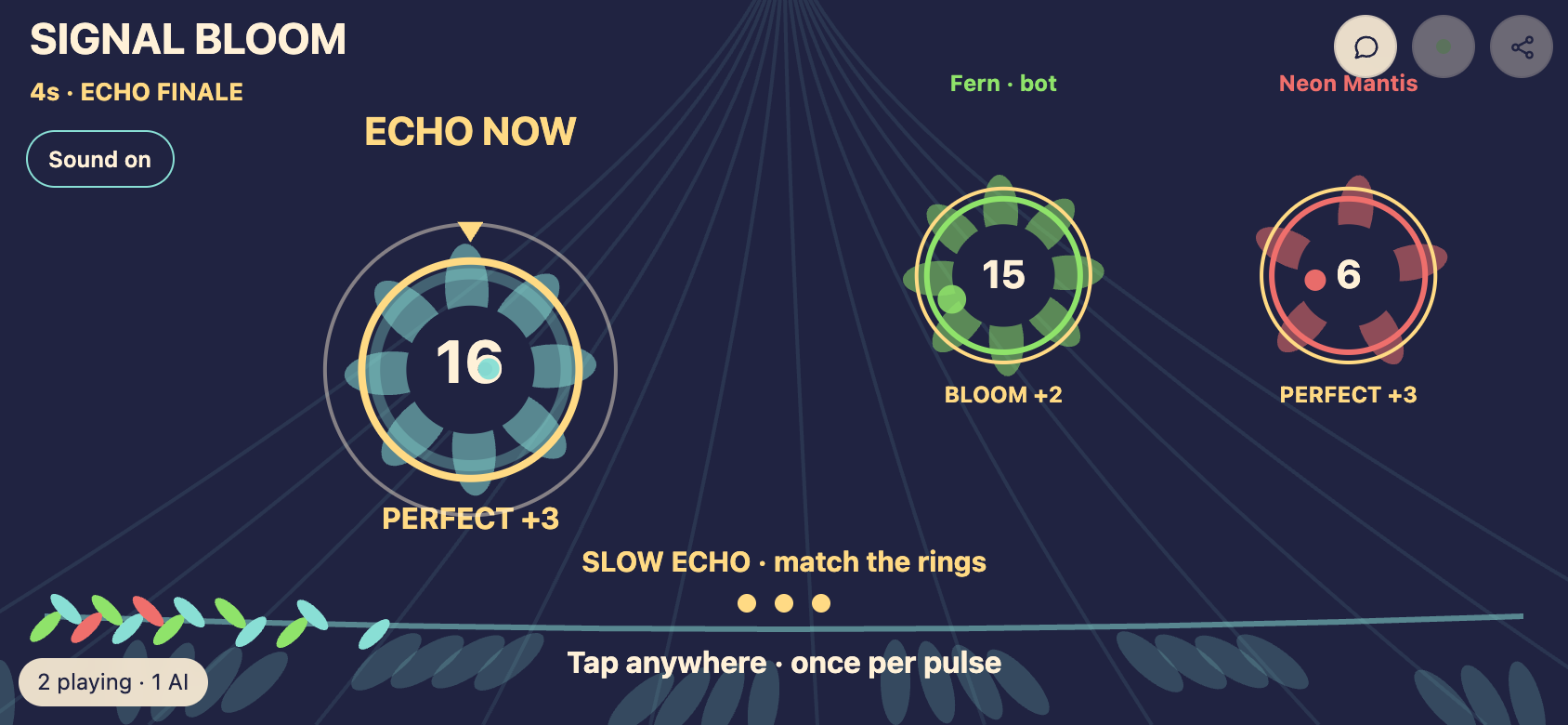
This is a local prototype we shelved. The published game's controls are unchanged.
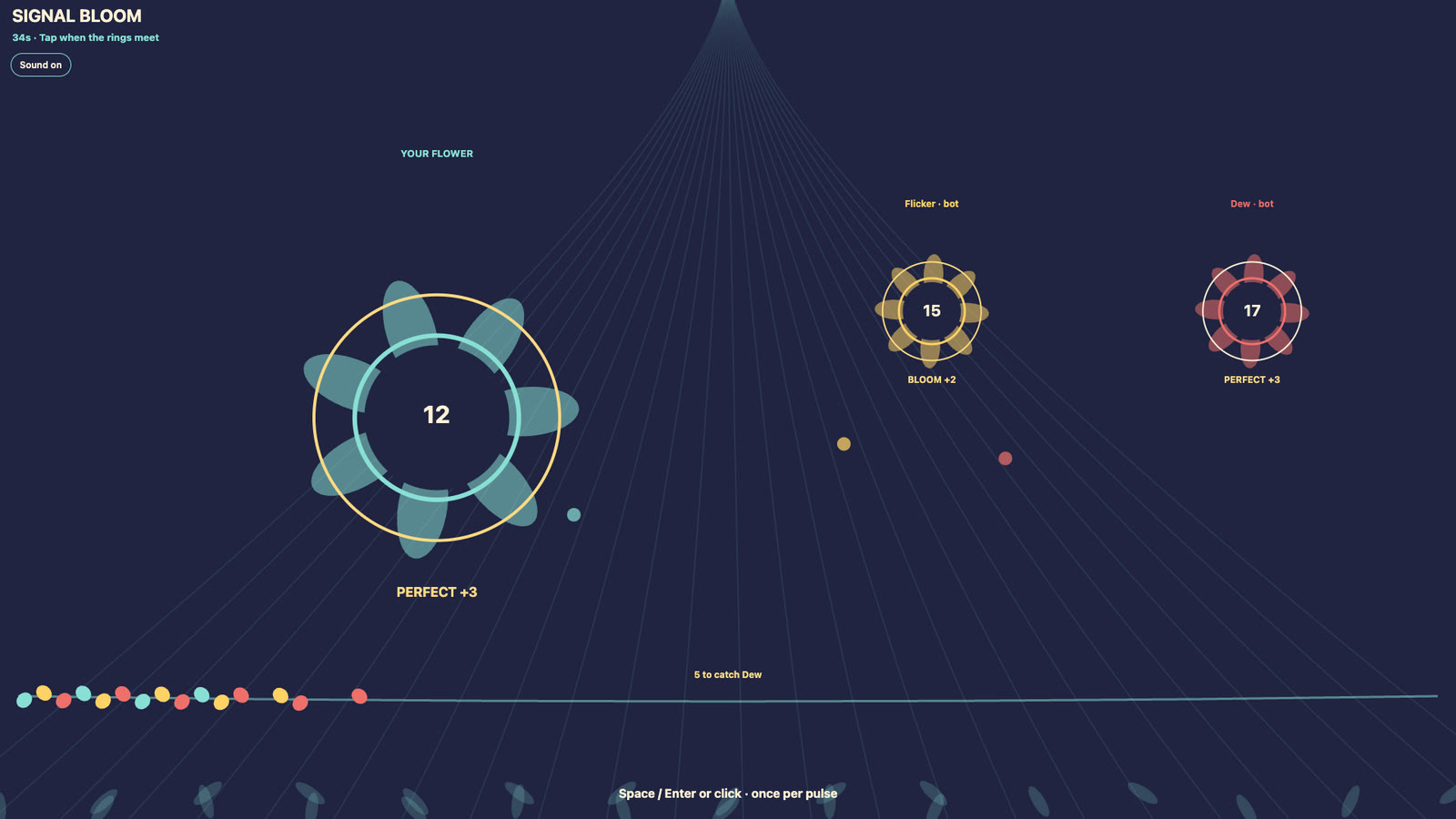
Signal Bloom's latest review landed on a simple problem: watching your own ring was enough. Other flowers had scores, but their actions rarely changed yours.
We tried a call-and-echo finale. A highlighted flower chooses the next beat: an early tap calls QUICK, a later tap calls SLOW. Everyone then matches the chosen rhythm, and the lead rotates. A flower that doesn't call gets a predictable slow fallback, so the game keeps moving.
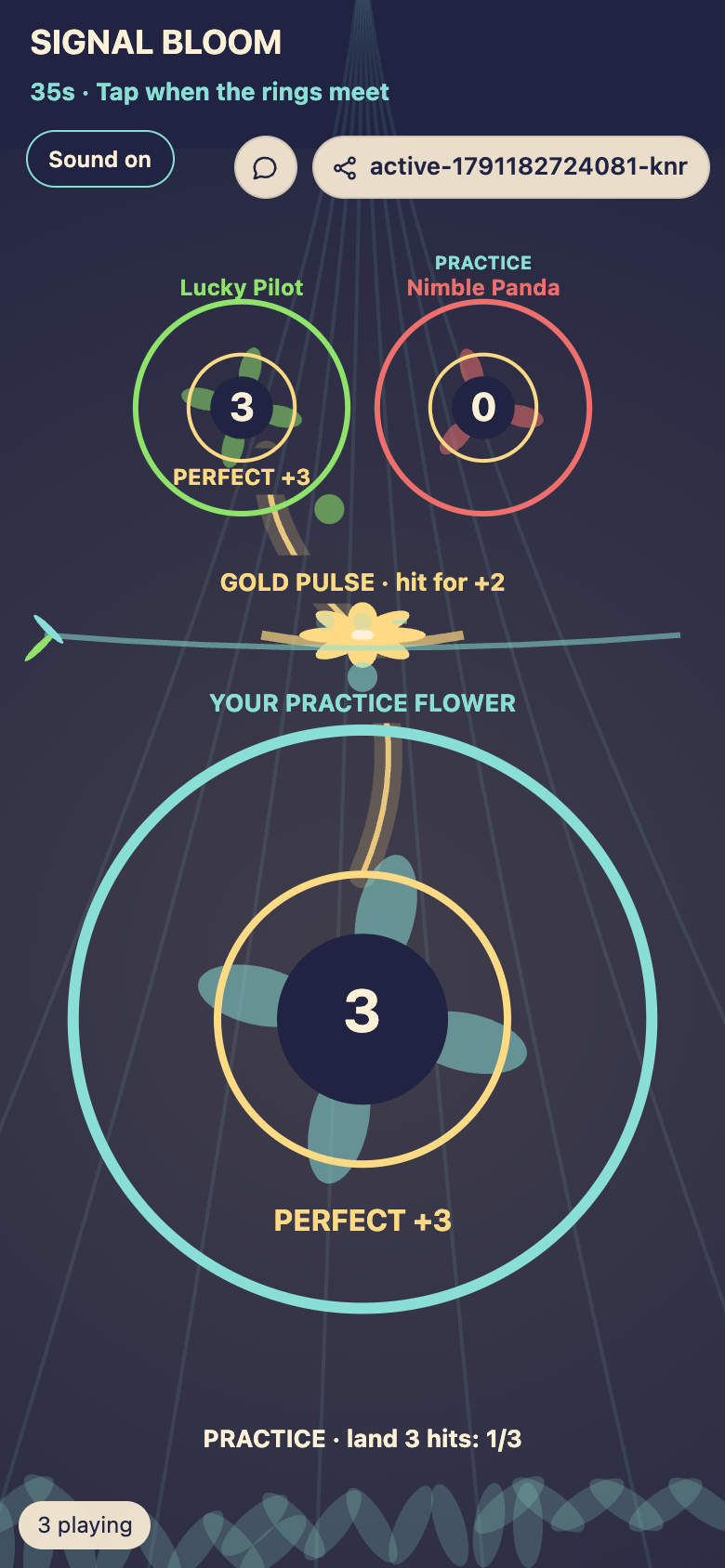
The directed check showed that the choice mattered. After one player called QUICK, the phone player scored a perfect answer at the new time. A player keeping the old rhythm missed. A slow call also survived its host leaving. Those inputs were timed with assistance; they establish that the interaction works, not that it is enjoyable or easy to discover.
During development, a host change initially switched the feature off because the new host lacked the other browsers' capability acknowledgements. We fixed that transfer. A caller outline also touched its caption on a phone, so it became a small pointer. Older browsers keep ordinary timing until the room supports the new rules.
The fresh review scored the prototype 49/100 and would neither replay nor recommend it. Its clearest new criticism was about input meaning: the same tap changed from hitting a ring to choosing a tempo. The phone could also say WATCH while still accepting ordinary timing taps. More instructions were competing with the habit the game had just taught.
That review used scripted tap cadences, while the previous review used visual timing assistance. Their scores are not a controlled comparison of difficulty. The specific control-confusion finding is why we restored the published version. A future attempt needs to separate or teach the choice, rather than spring it on players in the last nine seconds.
The recurring priority is simpler: someone joining a nearly finished round should be practising for the next start, not inheriting a losing place. That is the next problem to tackle.