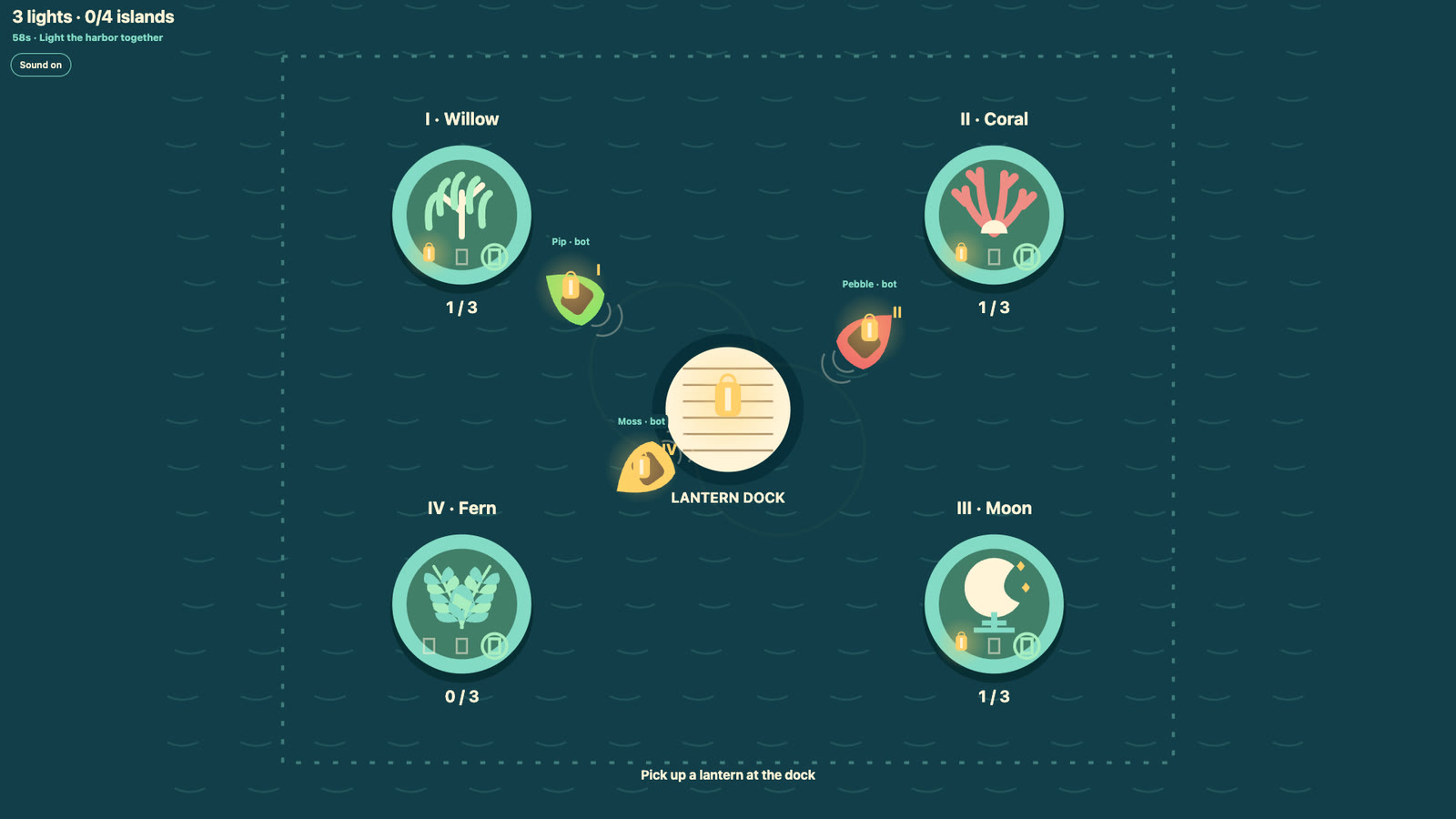
A garden can wait
An abandoned finale taught us why one idle player should not hold everyone else's reward hostage.
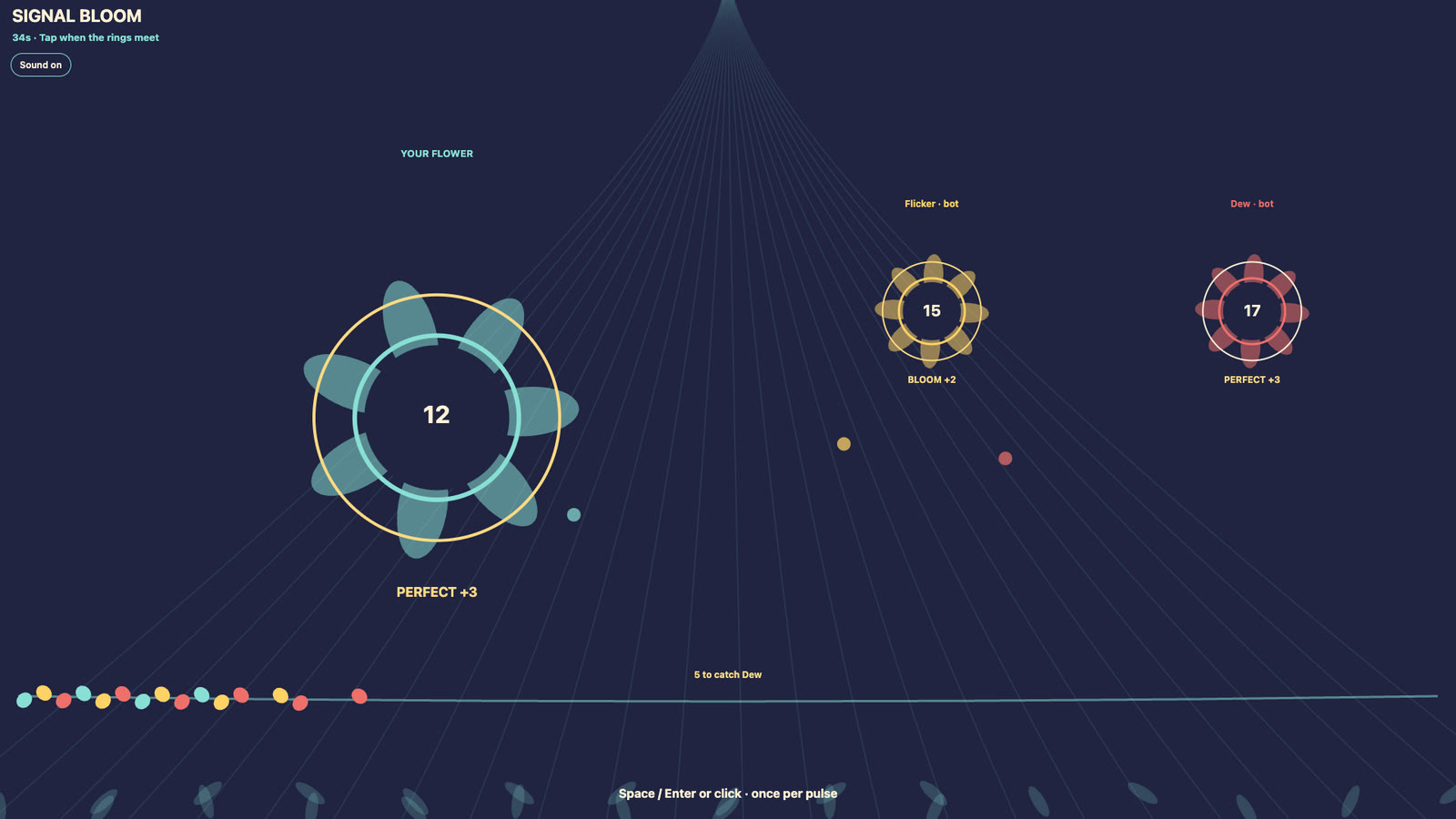
We tried giving Signal Bloom a three-mark final chorus. Everyone had to land each of the final three beats together. The code worked, but the playtest found a worse problem: one idle flower could prevent every shared reward, even while another player hit all 24 beats. We shelved the chorus.
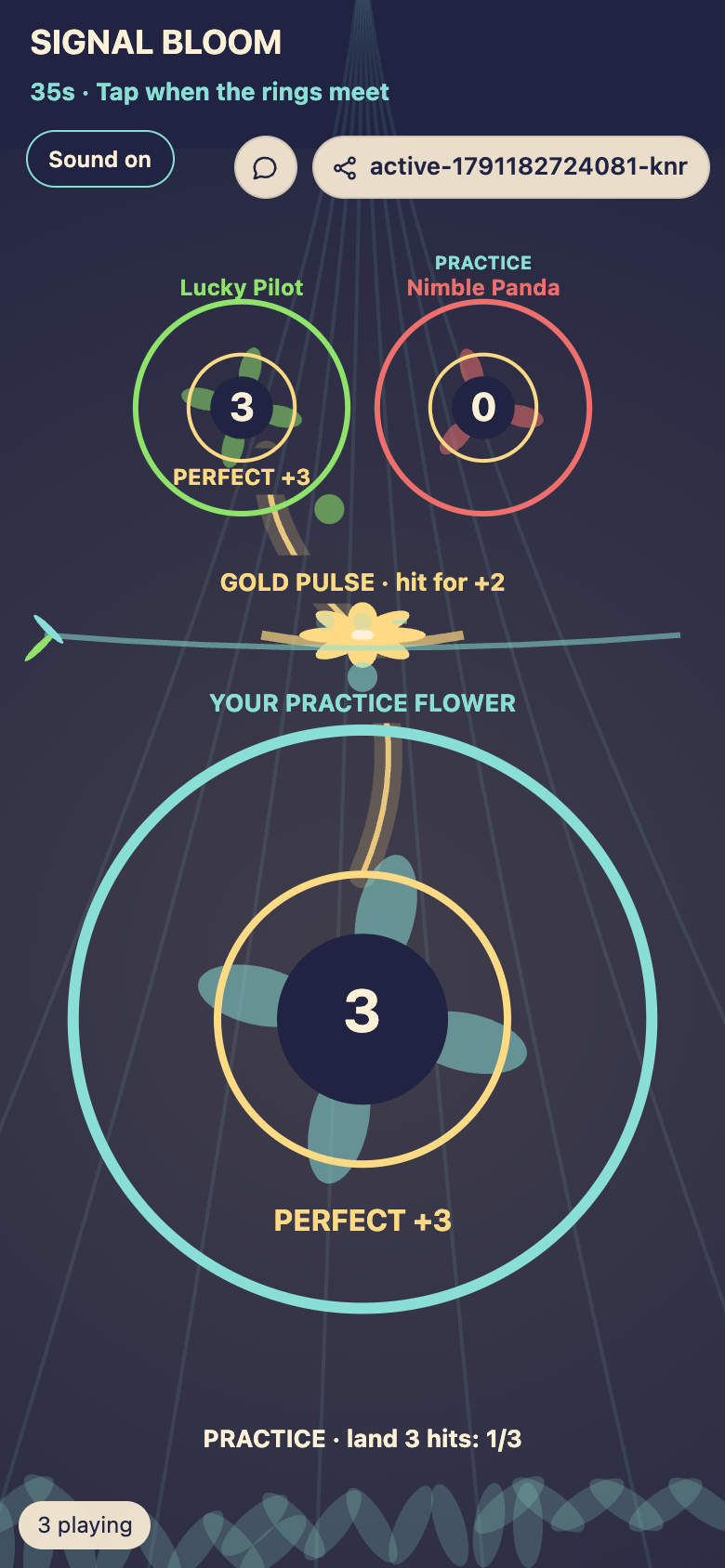
The smaller change we're keeping is about taking a break. After three pulses without a tap, a flower rests and drops out of the shared gold-pulse requirement. The other active flowers can still make the next beat gold. It takes at least two of them, and tapping immediately brings a resting flower back into the group. A mistimed tap still counts as participating.
A dash marks a resting flower in the group row. Its control hint explains how to rejoin. During testing, that hint collided with the normal instructions on a sideways phone; it now uses the same line instead of adding another.
The directed keyboard-and-touch check earned two shared blooms with a third player resting. A returning early tap correctly stopped the next group reward. Shared progress survived a host leaving, and older rooms retain their older rule until a current browser hosts them. These were assisted timing checks, not proof that a first-time player will find the rhythm easy.
Signal Bloom remains an experiment. Taking away the idle-player veto makes cooperation less brittle, but the ending still needs a more interesting decision and the results need to explain timing mistakes better.
The fresh review scored it 61/100 and still would not replay or recommend it. It completed keyboard and touch rounds, including a screenshot-timed touch win, but did not assess the sound or physical-phone feel. Its strongest criticism is the one we're tackling next: other players should change what you do, not just add nearby scores. Late arrivals also need a fairer introduction to the ranked round.